Louisiana Museum Day Trip from Copenhagen by Train
How to do a Louisiana Museum day trip from Copenhagen: the 40-minute train, 2026 tickets, Copenhagen Card, opening hours, what's on and how long to stay.
 By Anders Nielsen, Copenhagen Museums Specialist & Cultural Guide
The first time I walked a group down through Louisiana's galleries onto the lawn, someone stopped talking mid-sentence. A Calder mobile was turning slowly against the water, the Oresund ran flat all the way to the Swedish coast, and a Henry Moore bronze sat in the grass as if it had grown there. That view does most of the persuading. People come out expecting an art museum and find a coastline with sculpture on it.
I have made this trip out of Copenhagen more times than I can count, with first-time visitors, art students, and families who worried the kids would be bored. They rarely are. This guide is the version I give people before they go: the train that actually gets you there, what a ticket costs in 2026, how the Copenhagen Card changes the maths, what to see this year, and how to shape the day so you are not rushing the best part.
How do you get from Copenhagen to the Louisiana Museum?
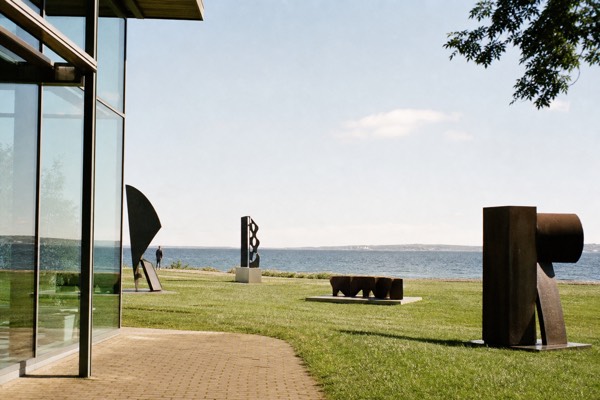
Take the Kystbanen coastal line toward Helsingor from Copenhagen Central, Norreport or Osterport to Humlebaek, a ride of about 40 minutes. From Humlebaek station it is a signposted 10 to 15 minute walk to the museum. Trains run several times an hour, so you do not need to plan around a rare departure.
The line you want is the Kystbanen, the coastal railway that hugs the Oresund north toward Helsingor. It calls at the main city stations, so wherever you are staying you can usually board without changing. From Copenhagen Central the trip to Humlebaek runs around 40 minutes; from Norreport or Osterport it is a few minutes less, since those stops are already heading north out of the centre.
At Humlebaek you follow the signs. The walk to Louisiana is flat, residential and clearly marked, past front gardens and a small parade of shops, and it takes most people 10 to 15 minutes. There is no shuttle and you do not need one. If you would rather check live departures and platforms before you leave, the national railway keeps a journey planner on the DSB site.
Driving is possible and there is free parking at the museum, but I rarely recommend it. The coastal road is pretty yet slow, city parking at your hotel usually costs more than the train, and the Kystbanen drops you within a short walk anyway. If you do take the train and want a paper ticket rather than an app fare, buy it from the machines or the ticket office at the city station before you board, since not every rural stop sells them. Children under 12 travel free with a paying adult on public transport, which quietly lowers the family cost of the trip before you even reach the museum.
One thing to know before you buy anything: this whole journey sits inside the transport zones the Copenhagen Card covers, which matters for the cost question below. Here is how the departure points compare.
| Start point | Line | Approx. time to Humlebaek | Then |
|---|---|---|---|
| Copenhagen Central (Kobenhavn H) | Kystbanen toward Helsingor | ~40 min | 10-15 min walk |
| Norreport | Kystbanen toward Helsingor | ~35 min | 10-15 min walk |
| Osterport | Kystbanen toward Helsingor | ~33 min | 10-15 min walk |
How much does a Louisiana day trip cost?
A 2026 adult ticket to Louisiana is 145 DKK, students with a card pay 130 DKK, and under-18s go free. On top of that you pay for the return train. If you hold a Copenhagen Card, both the train and the museum entry are already included, which is what tips the day trip in the card's favour for many visitors.
Bought on their own, the pieces are simple. Entry is 145 DKK for an adult, 130 DKK for students, and nothing for anyone under 18. The return train fare to Humlebaek is extra and depends on your ticket type. That is the pay-as-you-go route, and for a single person doing only this trip it can be the cheaper option.
The Copenhagen Card changes the calculation the moment you add a second or third paid sight. The card bundles free entry to more than 80 attractions with unlimited public transport across zones 1 to 99, and those zones reach all the way out to Humlebaek. So one card covers the ride there, the entry, and the ride back, plus whatever museums you visit in the city on the same days. The 2026 Discover prices run 589 DKK for 24 hours up to 1,419 DKK for 120 hours. You can see the current inclusions on the Copenhagen Card site.
For families the sums tilt further toward the card. A parent can bring young children on their own child cards at a much lower rate, under-18s enter the museums free, and the transport across a busy sightseeing day adds up fast when you are buying separate tickets for everyone. As a rough rule, if two adults plan to see Louisiana plus two or three city museums inside 48 hours, a couple of 48-hour cards usually come out cheaper than paying gate prices and train fares one by one. Do the trip alone and see nothing else, and pay-as-you-go stays the better call.
If you want to book Louisiana entry ahead so you are not standing at the desk on a busy weekend, reserve Louisiana Museum of Modern Art ahead and check availability for your date.
Here is how the two routes compare for a single adult who is only doing Louisiana that day. The card wins outright once you fold in other paid attractions across the same 24 or 48 hours.
| Cost item | Pay as you go | Copenhagen Card 24h |
|---|---|---|
| Louisiana entry (adult) | 145 DKK | Included |
| Return train to Humlebaek | Paid separately | Included |
| Other city museums that day | Full price each | Included |
| Card price (adult) | 0 DKK | 589 DKK |
Is the Louisiana Museum worth the day trip?
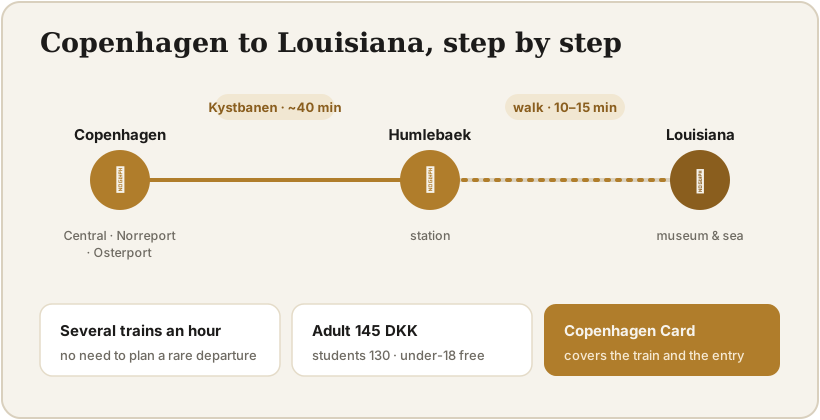
Yes, for most people it is the single best half-day trip out of Copenhagen. The pull is not one famous painting but the way the low glass building, the collection and the sculpture garden run into each other above the sea. You are outdoors as much as in, which makes it hold up even for people who think they do not like modern art.
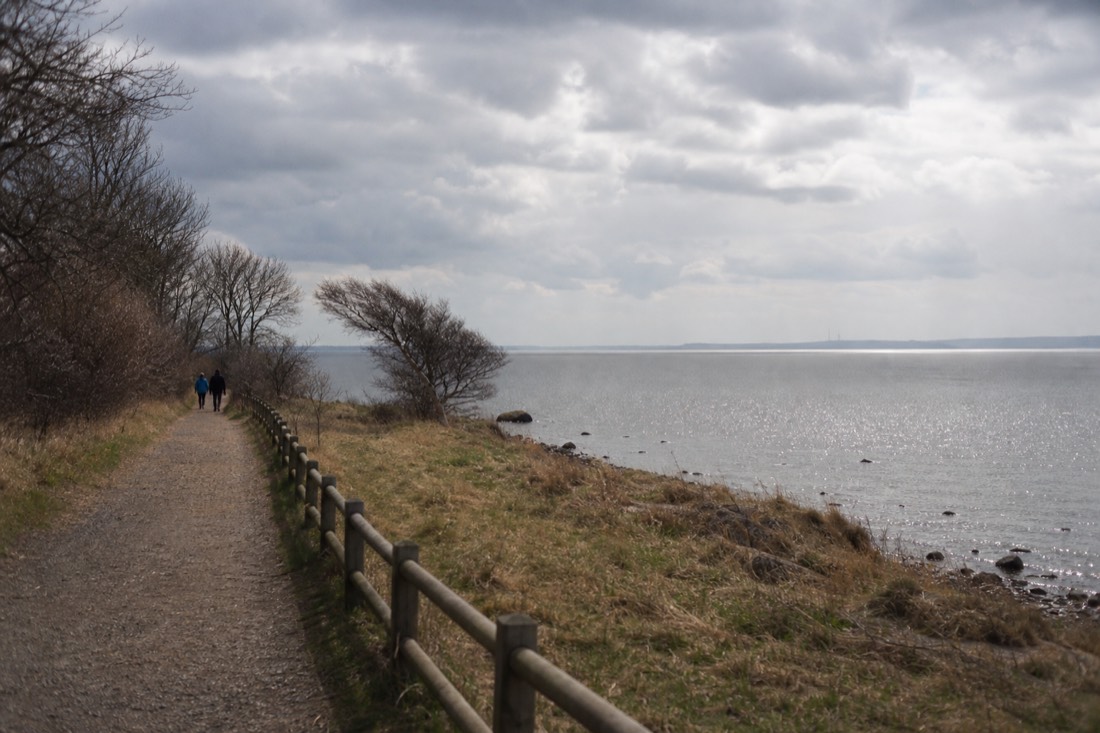
Louisiana was built as a series of glass corridors linking older villa rooms and newer wings, all threaded through a sloping garden that ends at the water. The effect is that you rarely feel enclosed. You walk from a gallery into daylight, past a bronze on the lawn, back inside to a room of paintings, then out again to the café terrace with the Oresund in front of you. Few museums anywhere use their setting this well.
That is also why it suits mixed groups. Serious gallery-goers get a strong permanent collection and ambitious temporary shows. Everyone else gets a coastline, room to breathe, and sculpture you can walk right up to. I have brought reluctant teenagers here who spent the whole visit outside among the Calders and Moores and still called it the best thing they did all week.
The backstory helps explain the feel of the place. Louisiana opened in 1958, the work of a cheese magnate and collector named Knud W. Jensen, who wanted modern art shown in daylight and landscape rather than in solemn city halls. The odd name is older still: it came with the 19th-century villa on the site, whose first owner named the estate after his three successive wives, each of them called Louise. Jensen kept the name and built glass wings out from the villa toward the sea, and that founding idea, art you meet while walking through a garden, is exactly what you still experience today.
What will you see at Louisiana in 2026?
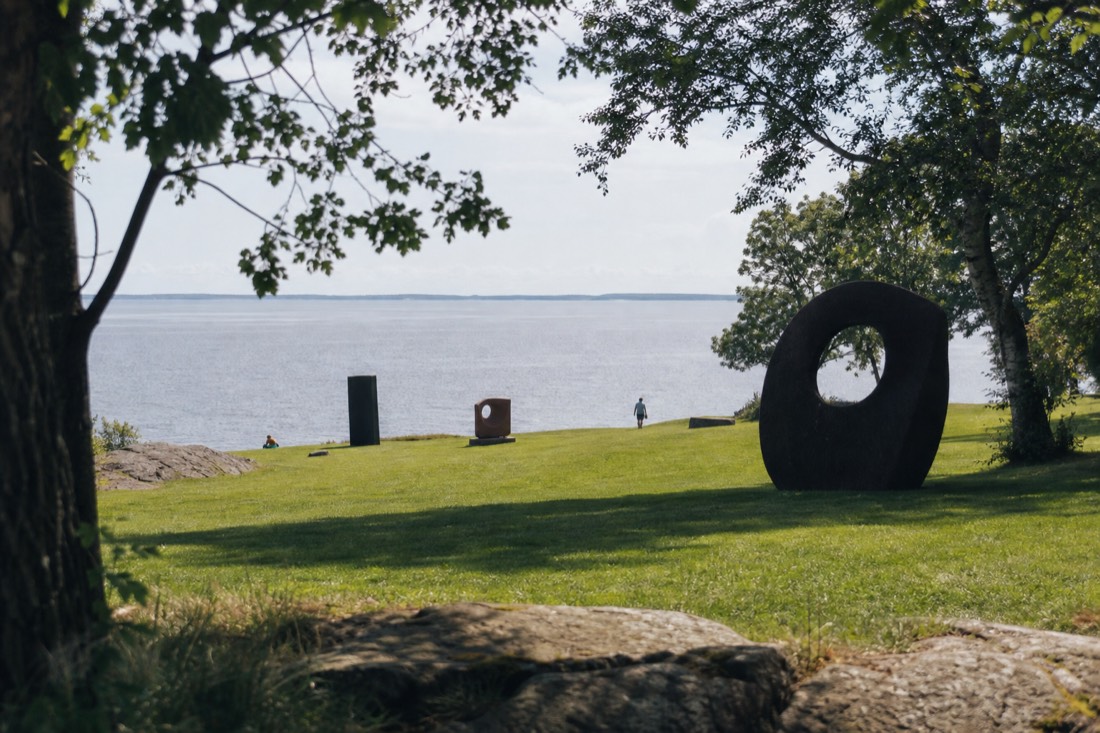
Expect the Giacometti gallery with its thin bronze figures, a sculpture park holding works by Calder, Henry Moore and Yayoi Kusama, and a rotating programme of major temporary shows. For 2026 that programme includes Lucian Freud, Sophie Calle and Arthur Jafa's APEX, each running through the summer and into autumn.
The permanent highlights are what give Louisiana its character. The Giacometti room, often on view, lines up his fragile standing figures against a window onto the park. Outside, the garden holds around 45 sculptures from the collection, among them Alexander Calder's mobiles, Henry Moore bronzes, and Kusama's mirrored installation Gleaming Lights of the Souls, a small dark room of hanging lights that people queue a few minutes to step inside.
Indoors the collection leans toward post-war and contemporary art, with a strong Danish thread. You will usually find work by Asger Jorn and the wider CoBrA group, whose raw colour and rough figures came out of Copenhagen, Brussels and Amsterdam in the late 1940s, alongside American Pop and a rotating hang of newer acquisitions. Because the museum keeps changing what is on the walls, no two visits look quite the same, which is part of why locals keep coming back rather than treating it as a one-off.
The temporary shows are the reason to check the calendar before you go, since they change the whole feel of a visit. Their dates for 2026 are below. You can confirm current exhibitions and any that have been added on the official Louisiana site.
| 2026 exhibition | Dates |
|---|---|
| Sophie Calle | 26 Mar - 6 Sep 2026 |
| Lucian Freud | 11 Jun - 27 Sep 2026 |
| Arthur Jafa: APEX | 23 Jun - 27 Sep 2026 |
How long should you spend at Louisiana?
Plan for three to four hours, more if you stop for lunch. That covers the permanent collection, at least one temporary show, and unhurried time in the sculpture garden. Add the round-trip train and a Louisiana day trip fills most of a day comfortably without feeling stretched thin.
The museum does not publish an official average visit length, but three to four hours matches what nearly everyone I take out there actually spends. Rush it in 90 minutes and you skip the part that makes the place, the slow loop through the garden. Give it a full afternoon and you can sit on the terrace with a coffee, watch the light change over the water, and still see everything indoors.
Lunch is worth building in. The café is a proper stop rather than an afterthought, with a long window wall facing the sea and a buffet that changes through the day. On a fine afternoon people eat outside on the grass. If you would rather picnic, the garden allows it, and Humlebaek has a supermarket near the station. Here is a timing shape that works well.
| Time | What you are doing |
|---|---|
| 0:00-0:15 | Arrive, ticket or card check, coats and bags |
| 0:15-1:30 | Permanent collection and the current major show |
| 1:30-2:15 | Lunch on the terrace or a picnic on the lawn |
| 2:15-3:30 | Sculpture garden, Giacometti gallery, the sea view |
| 3:30-4:00 | Bookshop, last rooms, walk back to the train |
What is the best way to plan the day?
Catch a mid-morning Kystbanen train, reach Louisiana soon after it opens, and see the indoor collection before the midday crowd. Break for lunch on the terrace, spend the warmer part of the afternoon in the garden, and ride back to the city in the early evening. Going on a weekday and avoiding Monday, when it is closed, makes the whole plan smoother.
The single best decision is your travel day. Louisiana is closed on Mondays, and weekends bring the biggest crowds, so a weekday visit gives you quieter galleries and a calmer garden. A mid-morning departure lands you there for the gentle opening hours, when the rooms are near empty and the light off the water is at its best.
From there the day almost runs itself. Do the paintings and the temporary show first, while your attention is fresh and the indoor rooms are quiet, then let the afternoon slow down outside. If you are here on a Tuesday through Friday you have the luxury of the late 22:00 closing, which means you can even come out after a morning in the city and still have hours to spare.
Season matters more here than at an indoor city museum, because so much of Louisiana is the garden. Late spring through early autumn is the sweet spot, when the lawns are open, the café spills outside, and the sea is a colour worth crossing a country for. Winter still rewards the trip, the glass corridors and the collection do not close, but you will spend more of the visit indoors and the sculpture park becomes a brisk walk rather than a lingering one. Whatever the month, aim for daylight hours in the garden and save the late evening for the galleries.

Can you combine Louisiana with other museums in Copenhagen?
You can, though Louisiana really deserves a half-day of its own. If you are short on time or the weather turns, the city holds strong art alternatives that pair naturally with a Copenhagen Card: the Glyptotek for antiquities and French painting, and the National Museum of Denmark for the wider Danish story. Both are central and quick to reach.
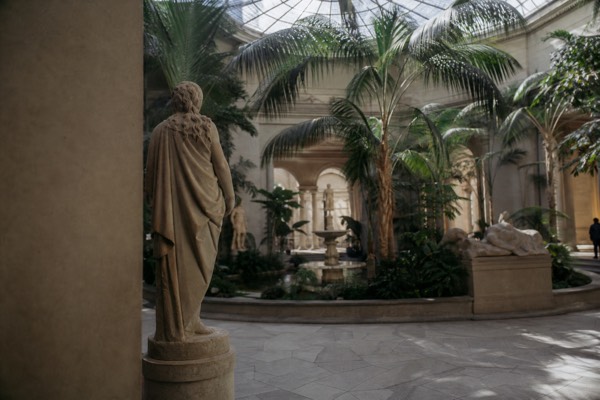
If a full day trip does not fit your schedule, or you simply want an art fix without the train ride, the Ny Carlsberg Glyptotek is the closest match in spirit. It gathers ancient Mediterranean sculpture and a fine run of French and Danish art around a domed winter garden of palms, and it sits right behind Tivoli in the centre. It is one of the loveliest interiors in Copenhagen, and it makes a good rainy-afternoon substitute when the coast is too grey for a garden museum.
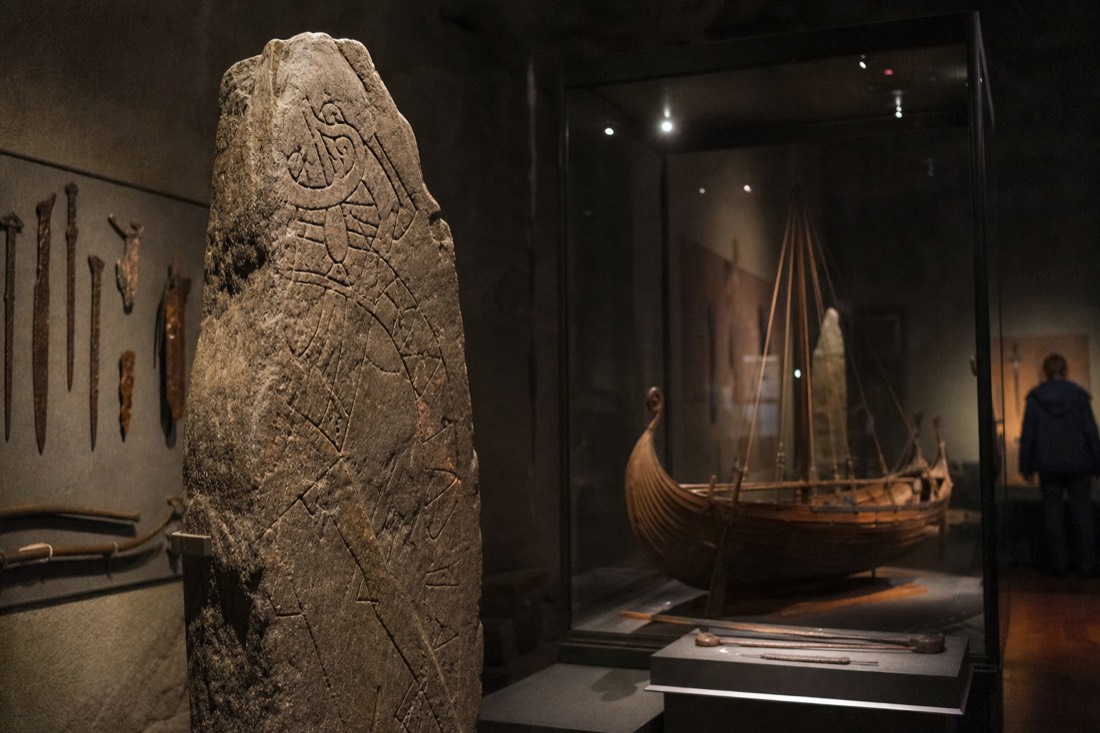
For a complete change of subject, the National Museum of Denmark runs from Stone Age tools and the Sun Chariot through a strong Viking hall and into ethnographic collections. It is a short walk from the harbour and works well as a morning before an afternoon train out to Humlebaek, especially on a Copenhagen Card that covers both. If you are weighing whether that pass is worth it for your trip, my full breakdown lives in the is the Copenhagen Card worth it guide, and there is a wider roundup in the art museums in Copenhagen guide.
There is one more combination that many visitors miss, and it uses the same train. The Kystbanen you took to Humlebaek carries on north to Helsingor, home of Kronborg Castle, the Renaissance fortress that Shakespeare turned into Hamlet's Elsinore. Ambitious travellers pair the two on a single card day, Louisiana in the morning and Kronborg in the afternoon, though it is a full and fast day rather than a relaxed one. If castles pull you more than modern art, a short branch line inland reaches Frederiksborg Castle at Hillerod instead. All three sit inside the Copenhagen Card's transport zones, so the card can turn a whole northern day into one flat price.
Is Louisiana a good day trip with kids?
Louisiana works better with children than most art museums, thanks to a dedicated children's wing where kids make their own art and a garden they can run in without being shushed. Under-18s enter free, and children under 12 travel free on the train with a paying adult, so the family cost stays low. Bring outdoor clothes and let the garden do the entertaining.
The museum has long taken families seriously, and it shows. The children's house is a separate hands-on wing where kids paint, build and print, usually themed loosely around whatever is on in the main galleries. It gives younger visitors somewhere to be busy while the adults take a slower turn through the exhibitions, and the two are close enough that you can trade off.
The real secret weapon, though, is the garden. Sculpture you are allowed to walk right up to, wide lawns, and the sea at the bottom of the slope add up to a museum children rarely want to leave. I usually tell parents to do any indoor gallery they care about first, then release everyone onto the grass for the back half of the visit. Pack a light waterproof layer, since the coast is exposed, and the day tends to look after itself.

Know before you go
Louisiana opens Tuesday to Friday from 10:00 to 22:00 and weekends from 10:00 to 18:00, and it is closed on Mondays. Bring a light layer for the exposed coastal garden, allow for the 10 to 15 minute walk from the station, and check the exhibition dates before you travel so a show you want is actually up.
The late weekday closing is the detail most people miss, and it is a gift. A Tuesday-to-Friday visit can start in the afternoon and still give you a full evening in the galleries, which suits anyone who wants a slow morning in the city first. Weekends close earlier at 18:00, so start those days sooner.
A few practical notes save hassle. The garden is open to the sea, so it catches the wind even on warm days, and a jacket is smart from autumn through spring. The station walk is flat but real, so factor it into your return train timing rather than sprinting for a departure. For a second opinion on whether the trip earns its place in a short city break, I keep an honest verdict in the blog post on whether the Louisiana Museum is worth visiting.