Opens the museum's own visitor page. There is nothing to book: the permanent collection is free.
Admission
Free
Area
Central Copenhagen, Kronprinsessegade
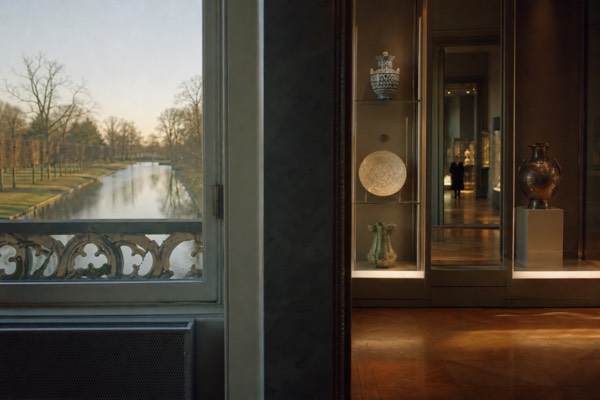
Push open the door of a nineteenth-century townhouse on Kronprinsessegade and you step into one of the great Islamic art collections in the world, usually with almost no one else in the room. A carved Mughal jade, a page of gold-lettered Koran, a Persian carpet woven like a walled garden: the David Collection keeps all of it behind the calm facade of a private home by the King's Garden, and it costs nothing to walk in.
What will you see at The David Collection?
The David Collection holds three collections in one townhouse: a world-class Islamic art collection that fills most of the building, a set of European decorative arts and paintings, and a smaller group of Danish Early Modern art. The Islamic galleries are the reason it has an international reputation, spanning more than a thousand years and much of the Islamic world.
The Islamic art is the heart of it, and it is genuinely one of the finest such collections anywhere and the largest in Scandinavia. The rooms run from early Spain across North Africa, the Middle East and Persia to Mughal India, and from the seventh century to the nineteenth. You move between glazed ceramics and lustreware, inlaid metalwork, carved rock crystal and jade, silk and carpets, arms and armour, and illuminated manuscripts whose gold and lapis still shine under the case lights. The objects are arranged by region and period, so the whole sweep reads clearly even on a first visit.
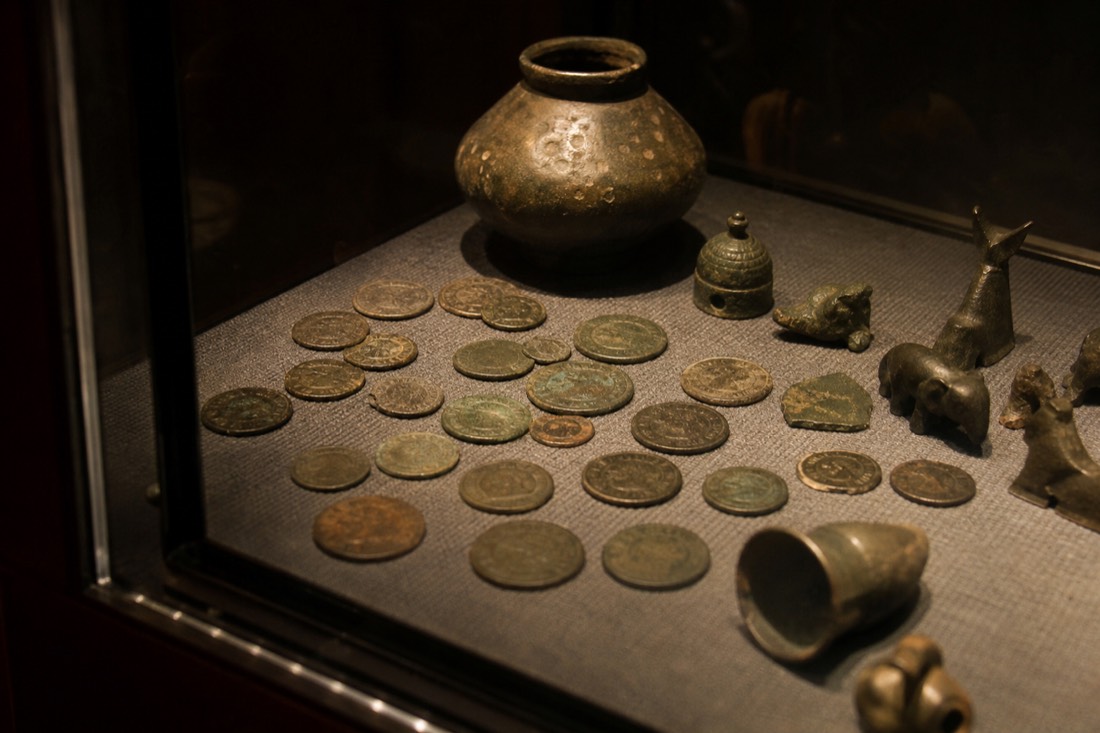
Certain groups stand out even within such a wide collection. A coin cabinet traces Islamic history through its currency, the arms and armour rooms hold richly worked swords and daggers, and the manuscript cases include Korans and scientific and poetic texts copied and illuminated by hand. Because the display follows dynasty and region, you can pick one craft, ceramics or metalwork, and follow it across centuries and empires as you walk the floors.
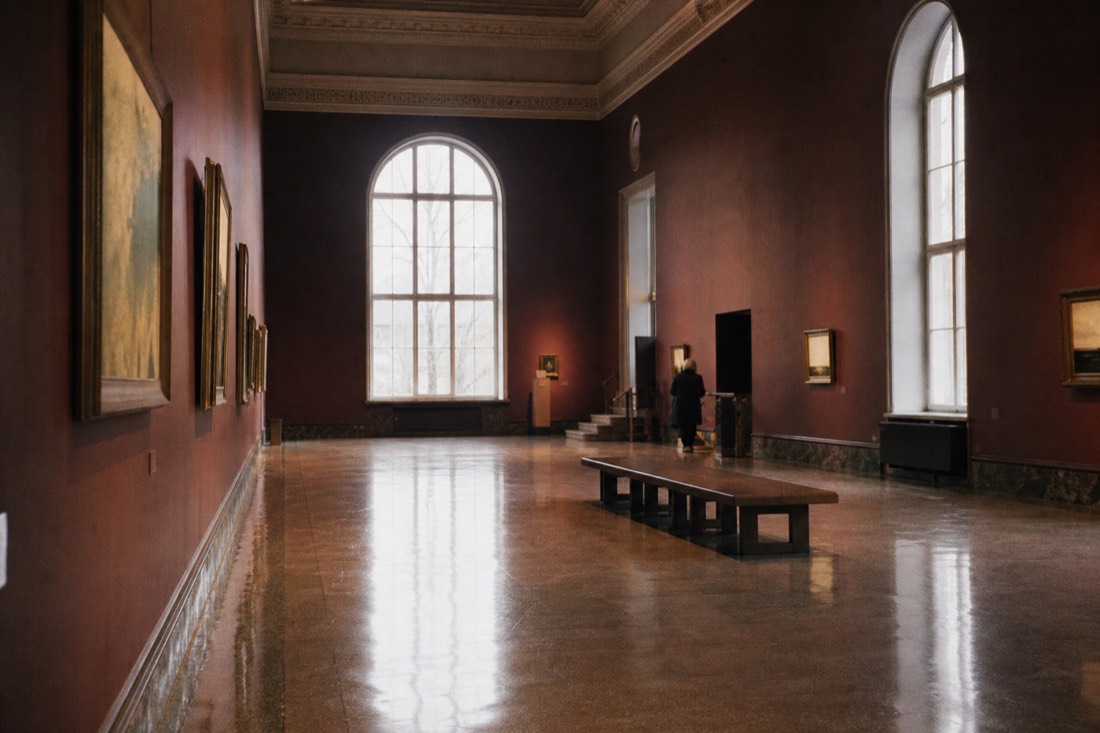
The European rooms are quieter but rewarding. The founder gathered eighteenth-century furniture, silver, porcelain and paintings, and these are shown much as a well-off collector's home might have kept them, which suits the townhouse setting. A smaller selection of Danish Early Modern art rounds out the building, a reminder that this began as one person's private taste rather than a state museum.
The setting matters as much as the objects. Christian Ludvig David, a lawyer and businessman, left his collection and his home to a foundation that still runs the museum, and the intimate scale of the rooms, the domestic staircases, the human-sized galleries, makes it feel unlike the grand national museums across town. It is the kind of place where you can stand alone in front of a masterpiece for as long as you like.
Is The David Collection really free?
Yes. The David Collection is free to enter, year-round, for everyone, with no ticket to buy and nothing to book ahead. That covers the permanent Islamic, European and Danish galleries as well as the special exhibitions. A foundation set up by the founder funds the museum, which is why it can stay free where most Copenhagen museums now charge.
Because there is no admission and no timed entry, you simply turn up during opening hours and walk in. That makes it one of the easiest and best-value cultural stops in the city, and a natural pairing with a paid museum nearby: you might spend the morning somewhere with an entry fee and drop into the David Collection in the afternoon for nothing. There is no gift-shop hard sell and no crowd management, just the galleries. Free art of this quality is genuinely rare in a European capital, and it is worth knowing that even the special exhibitions, which at many museums carry a separate charge, are free to see here as well.
It is also one of the calmer museums in central Copenhagen. The Islamic art draws a steady stream of people who know about it, but it rarely feels busy in the way the big-name sights do, so it suits a slow, unhurried visit. If you want to give something back, the foundation welcomes donations, but nothing is required to look. The table below sums up what free entry covers.
Admission
Detail
Entry price
Free for all, year-round
Booking
None needed; walk in during opening hours
Included
Permanent galleries and special exhibitions
Copenhagen Card
Not needed here; it is already free
How long do you need at The David Collection?
Most visitors spend about one to two hours here. An hour covers the Islamic highlights across the main floors; closer to two hours suits anyone who reads the manuscripts, works through the ceramics and metalwork, and takes in the European and Danish rooms as well. It is a mid-sized townhouse museum, so it rarely needs a whole afternoon.
A simple approach is to give the Islamic galleries the bulk of your time, since that is the world-class part, then loop through the European and Danish rooms on the way down. The layout follows the shape of the original house, so it is a gentle walk between small rooms rather than a march through vast halls, and there are places to pause. Because it is free, you can also treat it as a short, focused visit and see only the Islamic art without feeling you wasted a ticket.
Quiet and free together make this an easy stop to slot into a wider day. Art lovers can linger; a general visitor can take the highlights in under an hour and move on to Rosenborg or the King's Garden next door.
One quiet advantage of a free museum is that you do not have to see it all in a single go. Locals treat the David Collection as somewhere to drop into for half an hour, coming back for a different floor another day, and a visitor on a longer stay can do the same without the feeling of a paid ticket going to waste.
Know before you go: hours, closed days and getting there
The David Collection is at Kronprinsessegade 30, along the eastern edge of the King's Garden in central Copenhagen. It is generally open Tuesday to Sunday and closed on Mondays, with a later opening on Wednesday evening. Entry is free, so there is nothing to book. Because a small foundation runs it, confirm the current times on davidmus.dk before you visit.
The nearest stations are Norreport and Kongens Nytorv, each about a ten-minute walk, and both are served by the Metro, and Norreport by the S-train and regional lines as well. That puts almost any city hotel within a short ride. Several buses stop nearby. If you are already in the King's Garden for Rosenborg, the museum is right on the far side of the park.
A few practical notes. The building is a converted townhouse, so there are stairs between floors; check access ahead if that matters for your group, and large bags go in the cloakroom. Photography rules are posted at the entrance. Hours can shift for events and holidays at a foundation-run museum, more than at a large public one, so the official site is the place to confirm. The at-a-glance table below covers the essentials.
At a glance
Detail
Address
Kronprinsessegade 30, by the King's Garden, central Copenhagen
Nearest station
Norreport and Kongens Nytorv, about a 10-minute walk
Opening hours
Generally Tue to Sun, with a late Wednesday; confirm on davidmus.dk
Closed day
Mondays
Entry
Free for all, year-round
Booking
None needed
What can you pair with The David Collection nearby?
The David Collection sits right by the King's Garden, so it pairs beautifully with Rosenborg Castle across the park. A little further out, the National Museum of Denmark and the Ny Carlsberg Glyptotek round out a full art-and-history day, and the walk from a free museum to a paid one is short in every direction.
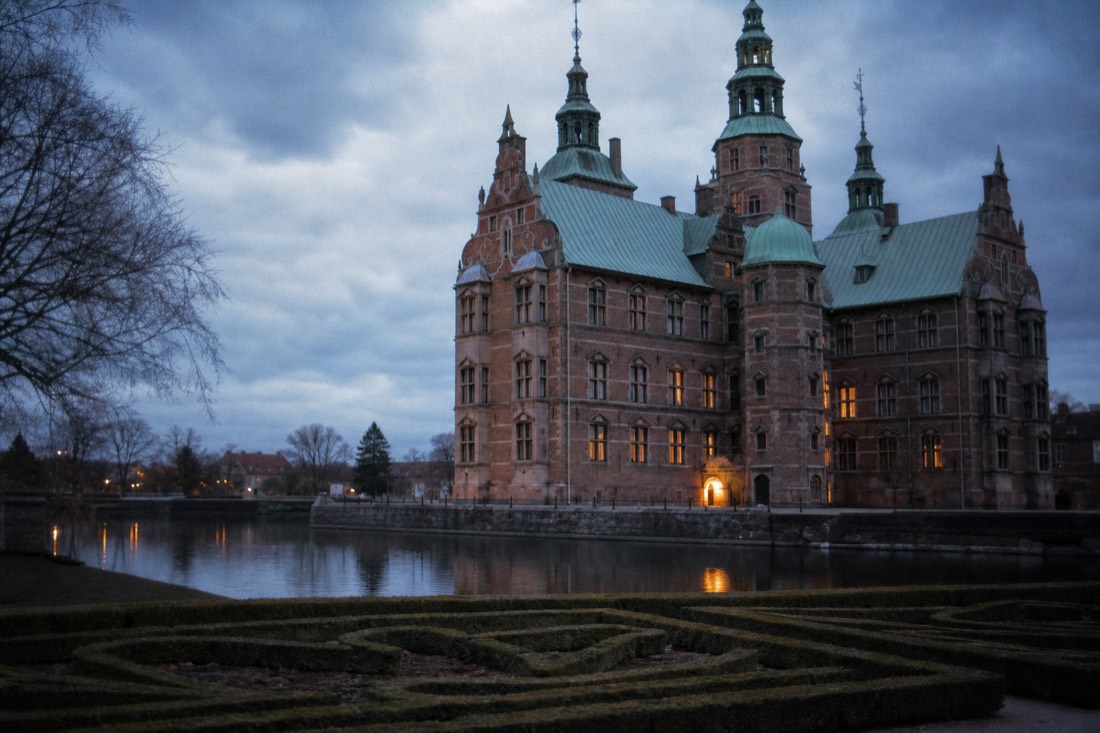
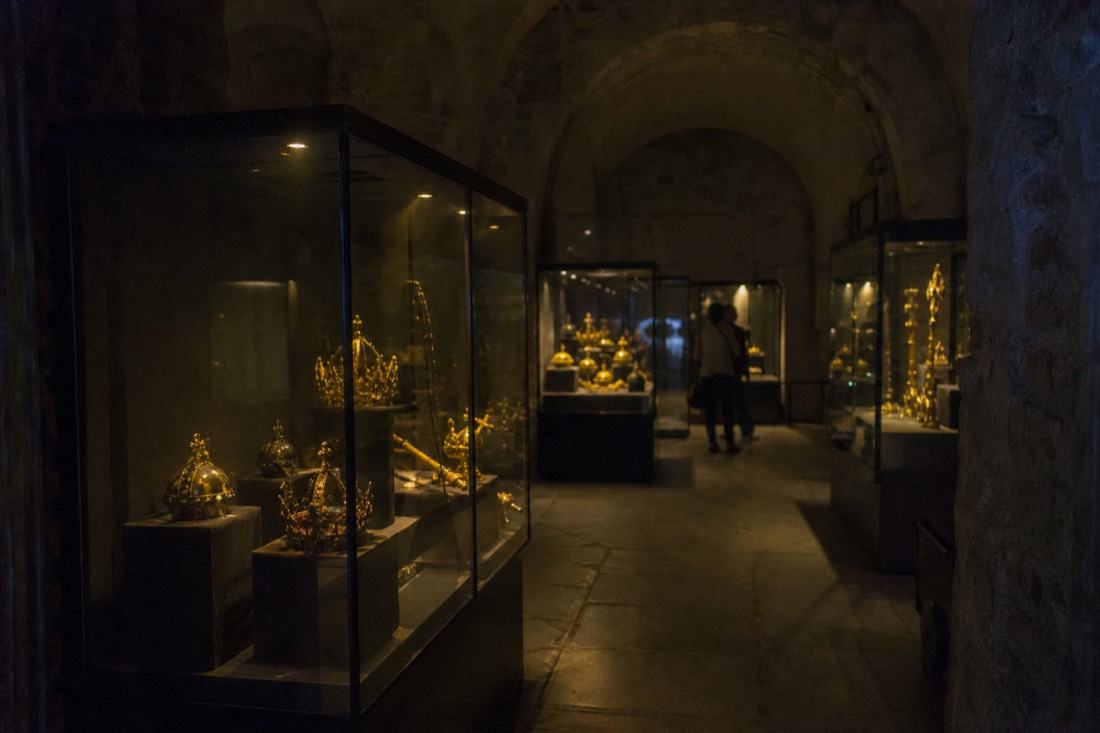
The obvious next stop is Rosenborg Castle, a few minutes across the King's Garden, where the Danish crown jewels sit in the basement treasury. It is a natural contrast: a free, quiet art collection followed by a royal castle. For a change of subject, the National Museum of Denmark covers the country's story from the Vikings onward a short ride away.
If you would rather stay with art, the Ny Carlsberg Glyptotek adds ancient sculpture, Rodin and Degas, and a palm winter garden near the main station. Rosenborg, the National Museum and the Glyptotek are all covered by the Copenhagen Card, which you can check on the Copenhagen Card site. There is more on the founder and the collection on Wikipedia.
Questions people ask
Is The David Collection free to visit?
Yes. The David Collection is free to enter, year-round, for everyone, with no ticket to buy and nothing to book. Free entry covers the permanent Islamic, European and Danish galleries as well as the special exhibitions. A foundation set up by the founder funds the museum.
What is The David Collection known for?
It is best known for its Islamic art, one of the finest such collections in the world and the largest in Scandinavia, spanning Spain to Mughal India and the seventh to the nineteenth century. It also holds European decorative arts and a smaller group of Danish Early Modern art.
Do I need to book The David Collection in advance?
No. Entry is free and there is no timed ticket, so you simply arrive during opening hours and walk in. That makes it one of the easiest cultural stops in the city and a natural free pairing with a paid museum nearby.
Is The David Collection open on Mondays?
No. It is generally closed on Mondays and open Tuesday to Sunday, with a later opening on Wednesday evening. Because a foundation runs it and hours can change for events, confirm the current times on davidmus.dk before you go.
How long should I spend at The David Collection?
Plan one to two hours. An hour covers the Islamic highlights; two hours suit anyone who reads the manuscripts and works through the ceramics, metalwork and the European and Danish rooms. Because it is free, a short focused visit works just as well.
How do I get to The David Collection?
The museum is at Kronprinsessegade 30, along the King's Garden. The nearest stations are Norreport and Kongens Nytorv, each about a ten-minute walk and served by the Metro, with the S-train and regional lines at Norreport. Several buses stop nearby.
Is The David Collection worth visiting?
Yes, and it is hard to beat for value since it is free. The Islamic art is world-class, the townhouse setting is intimate and quiet, and it pairs easily with Rosenborg Castle and the King's Garden next door. For anyone interested in Islamic or decorative art it is a highlight.
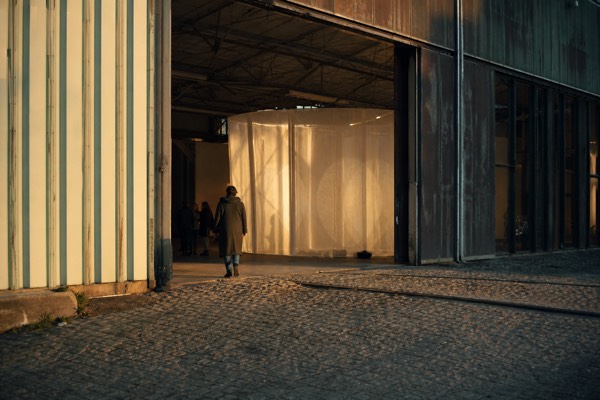
Refshaleoen (former shipyard, east harbour) · Warehouse-scale installation art
A non-profit art center in a former welding hall on Refshaleoen, built for the kind of huge, walk-into installation and light works that ordinary galleries cannot hold. Pairs well with a street-food stop at nearby Reffen.
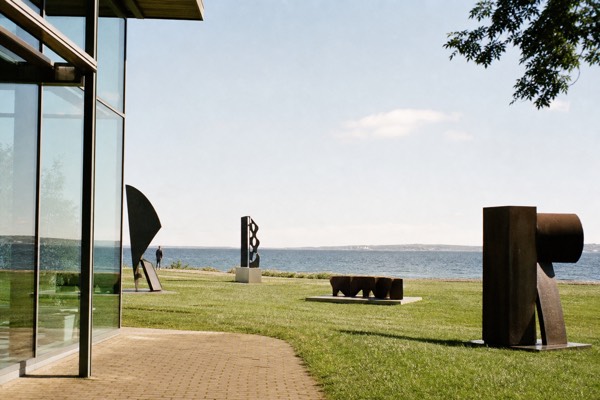
Humlebaek (day trip, ~35 min by train) · Modern art, sculpture park and the sea
The reason many people take a train out of Copenhagen: a modern-art museum on the Oresund coast at Humlebaek where the galleries open onto a sculpture park and views across to Sweden. Calder, Giacometti and rotating shows, all a short walk from the station.
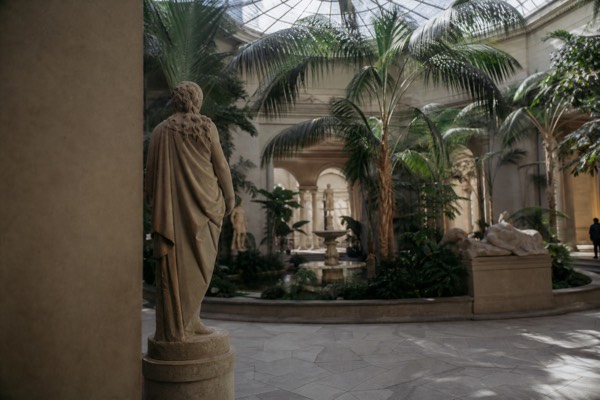
Central Copenhagen, behind Tivoli · Antiquities under a palm-filled winter garden
The brewer Carl Jacobsen's collection behind Tivoli: ancient Egyptian, Greek and Roman sculpture, a strong run of French and Danish art including Rodin and Degas, all around a domed winter garden of palms. One of the loveliest interiors in the city.