Opens the official listing with live dates and prices. Book there; nothing is charged on this site.
Area
Central Copenhagen, Frederiksstaden
Theme
Royal palaces & castles
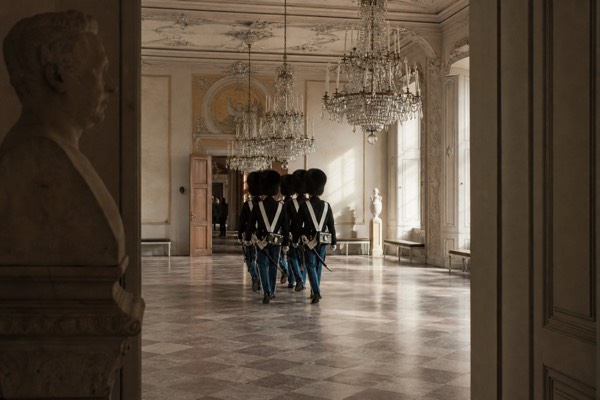
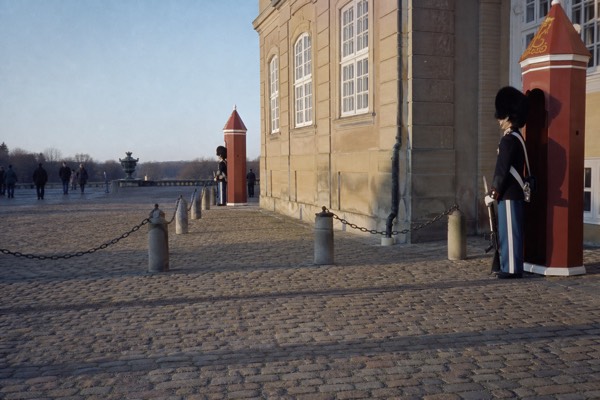
At noon a column of guards in tall bearskin caps marches into the octagonal square, and the crowd shifts to watch the changing of the guard on the cobbles between four matching rococo palaces. Three of them are still lived in by the Danish royal family. Behind the fourth facade, the museum keeps the private studies of recent Danish kings almost exactly as they were left, down to the pipe on the desk and the paintings crowding the walls.
What will you see inside the Amalienborg Museum?
The Amalienborg Museum fills Christian VIII's Palace with the preserved private studies and drawing rooms of the most recent Danish monarchs, a gala hall, a collection of costumes and orders, and the family tree of the Glucksborg house. Outside, the four palaces frame the square where the changing of the guard happens every day at noon. The square itself is free.
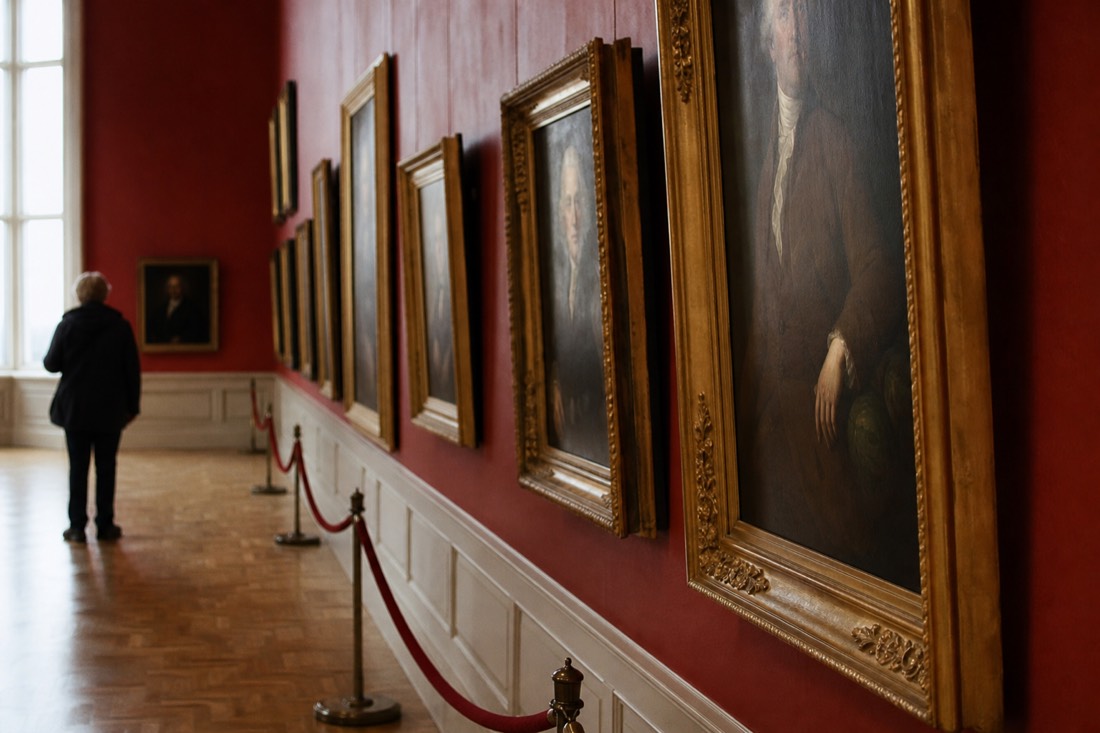
The heart of the museum is a run of reconstructed royal interiors from roughly 1863 to 1972. You see the actual studies of the kings, kept as personal spaces rather than showrooms: the writing desk of Christian IX, whose many children married into royal houses across Europe and earned him the nickname the father-in-law of Europe, and the smoking rooms and salons of the kings who followed. The furniture, portraits and clutter are the real thing, which gives the rooms a lived-in feeling you rarely get in a palace.
Upstairs, the mood turns grander. The gala hall and reception rooms show how the court presented itself on formal occasions, alongside cases of decorations and the collars of the Danish orders of chivalry, the Order of the Elephant and the Order of the Dannebrog. A costume gallery holds gala dresses and uniforms, and a jewel room displays pieces worn by Danish queens. Together they explain how a small northern monarchy built and kept its image over 150 years.
The building itself is part of the story. Amalienborg is four near-identical rococo palaces set around an octagonal square, designed in the 1750s as homes for noble families and taken over by the royal family after their previous palace burned in 1794. An equestrian statue of Frederik V stands at the centre, and the whole square lines up on one axis with the domed Marble Church and, across the harbour, the modern Opera House. Standing in the middle, you are looking at one of the finest planned rococo spaces in Europe.
How do Amalienborg tickets work, and which one should you buy?
Amalienborg has a single museum ticket: 125 DKK booked online or 135 DKK at the door, with under-18s free and the Copenhagen Card included. It covers the whole museum in Christian VIII's Palace. The square outside, the changing of the guard and the view of the four palaces are all free, so you pay only to go inside the museum wing.
Because there is just one ticket, the only real decision is timing. The museum rarely holds a long queue, so booking ahead is more about locking in your date than beating a crowd, though a reserved ticket is handy in the summer holidays when the square fills for the guard change. If your plans are firm, it is quick to check availability for your day using the booking panel above. Under-18s go free but are still counted in the system.
The Copenhagen Card is the option to weigh if you are seeing several paid sights. It includes Amalienborg along with the regional trains and the Metro, and it pairs the palace easily with Rosenborg and Christiansborg on a single royal-themed day. The prices below are the current 2026 figures from the Royal Danish Collection, which runs the museum. Note that entering the museum does not get you into the three palaces where the royal family actually lives; those stay closed to visitors.
Ticket
Price (2026)
Notes
Adult, booked online
125 DKK
Museum in Christian VIII's Palace
Adult, at the door
135 DKK
Subject to same-day availability
Under 18
Free
Still needs a ticket in the system
The square and guard change
Free
Open to everyone, no ticket
Copenhagen Card holder
Included
Free entry, plus regional transport
How long do you need, and when should you visit?
Most people spend about one to one and a half hours inside the Amalienborg Museum. The bigger planning question is timing: the changing of the guard reaches the square at 12:00 every day, so many visitors arrive around 11:30 to watch it on the cobbles, then step into the museum afterwards. Time your visit around noon and you get both without waiting around.
The guard change is worth planning for. The soldiers of the Royal Life Guard march roughly three kilometres from their barracks by Rosenborg through the city centre, arriving at Amalienborg at midday. When the monarch is in residence, shown by the standard flying over the palace, the ceremony is larger and comes with the regimental band. It costs nothing and happens in the open, so stake out a spot on the square a little before twelve.
Inside, an hour is enough to walk the studies and the gala rooms at a steady pace, a little longer if you read every label or linger over the costumes and orders. Because the museum is compact and close to the harbour, it slots neatly between other stops. Many visitors combine it with the walk down to Nyhavn or a look at the Marble Church across the road, both a couple of minutes away and free to enjoy from outside.
Know before you go: hours, closed days and getting there
The Amalienborg Museum is in Christian VIII's Palace on Amalienborg Slotsplads, in the Frederiksstaden quarter near the harbour. It is generally open Tuesday to Sunday from 10:00 to 16:00 and closed on Mondays outside the summer holidays, when hours extend. The nearest Metro is Marmorkirken, about five minutes on foot. Check your date, since hours shift with the season.
Marmorkirken station on the M3 Metro line drops you beside the Marble Church, a short walk from the square. Kongens Nytorv Metro and the Nyhavn canal are both around 10 minutes away on foot, and several harbour buses and city buses stop nearby. The Copenhagen Card covers this transport as well as museum entry, so cardholders reach the palace at no extra cost.
A few practical notes. The guard change happens outdoors in all weather, so dress for the day if you plan to watch. Photography is generally fine inside the museum without flash, and large bags go in the cloakroom. The three residential palaces around the square are working royal homes and are not open to the public, so the museum wing is the only interior you can visit. The table below covers the essentials, with live details on the official site.
At a glance
Detail
Address
Christian VIII's Palace, Amalienborg Slotsplads, Frederiksstaden
Nearest station
Marmorkirken (Metro M3), about 5 min walk
Typical hours
Tue-Sun 10:00-16:00; extended in summer holidays
Closed day
Mondays outside summer
Guard change
Daily at 12:00 on the square, free
Copenhagen Card
Entry and transport included
What can you pair with Amalienborg nearby?
Amalienborg fits into a compact royal circuit with the city's other palaces, all a short walk or one Metro stop apart. The obvious combinations are Rosenborg Castle with the crown jewels, Christiansborg Palace and its state rooms, and, for the wider story of the country, the National Museum of Denmark. The Copenhagen Card covers all of them together.
See the living monarchy here, then walk about 15 minutes west to Rosenborg Castle, where the Danish crown jewels and coronation regalia sit in a vaulted treasury. The two make a natural pair, the private royal home at Amalienborg and the crown objects at Rosenborg, run by the same collection. On the other side of the centre, Christiansborg Palace holds the Royal Reception Rooms still used for state banquets, the medieval ruins beneath the courtyard, and a free tower with a rooftop view.
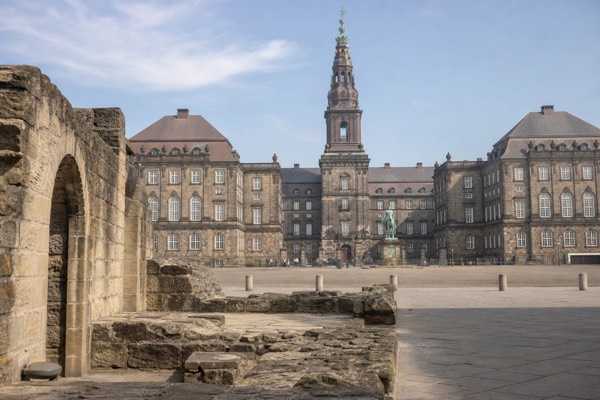
For a change from palaces, the National Museum of Denmark runs from the Vikings to the present a short Metro ride away, filling in the history the royals sit at the top of. Right beside Amalienborg, the domed Marble Church is free to step inside and worth a look. A Copenhagen Card prices this whole cluster in one purchase, and you can check what it includes on the Copenhagen Card site. The museum's own pages sit with the Royal Danish Collection, and there is background on the palaces on Wikipedia.
Questions people ask
How much does an Amalienborg ticket cost in 2026?
A standard adult museum ticket is 125 DKK booked online or 135 DKK at the door. Under-18s enter free but still need a ticket in the system. Copenhagen Card holders enter at no extra cost. The square outside and the changing of the guard are free to everyone.
What time is the changing of the guard at Amalienborg?
The guard reaches the square at 12:00 every day, after marching about three kilometres from the barracks near Rosenborg. When the monarch is in residence, shown by the flag flying over the palace, the ceremony is larger and includes the regimental band. It is free and happens outdoors, so arrive a little before noon.
Can you go inside the royal palaces at Amalienborg?
Only the museum wing, in Christian VIII's Palace, is open to visitors. The other three palaces around the square are working homes of the Danish royal family and are closed to the public. The museum ticket does not give access to them.
Is Amalienborg included in the Copenhagen Card?
Yes. The Copenhagen Card includes free entry to the Amalienborg Museum, along with unlimited public transport across the region, so the Metro and buses that reach the square are covered too.
How long should I plan for Amalienborg?
Plan about one to one and a half hours inside the museum. Many visitors add half an hour by arriving around 11:30 to watch the changing of the guard at noon, which is free and takes place on the square outside before you go in.
Is Amalienborg open on Mondays?
Outside the summer holidays the museum is closed on Mondays and open Tuesday to Sunday, roughly 10:00 to 16:00. In the summer holiday period hours extend and it may open daily. Because the calendar changes, check the official site for your exact date.
How do I get to Amalienborg?
The museum is on Amalienborg Slotsplads in Frederiksstaden, about five minutes on foot from Marmorkirken Metro station on the M3 line. Kongens Nytorv Metro and the Nyhavn canal are around 10 minutes away, and the Copenhagen Card covers all of this transport.
Is the Amalienborg Museum worth visiting?
If you like seeing how a monarchy actually lived, yes. The preserved royal studies feel genuinely personal, the gala rooms and jewels show the formal side, and the free guard change on the square is a highlight in itself. It is compact, close to Nyhavn, and easy to pair with Rosenborg or Christiansborg.
Hillerod (day trip, ~40 min by train) · A Renaissance castle on three islets
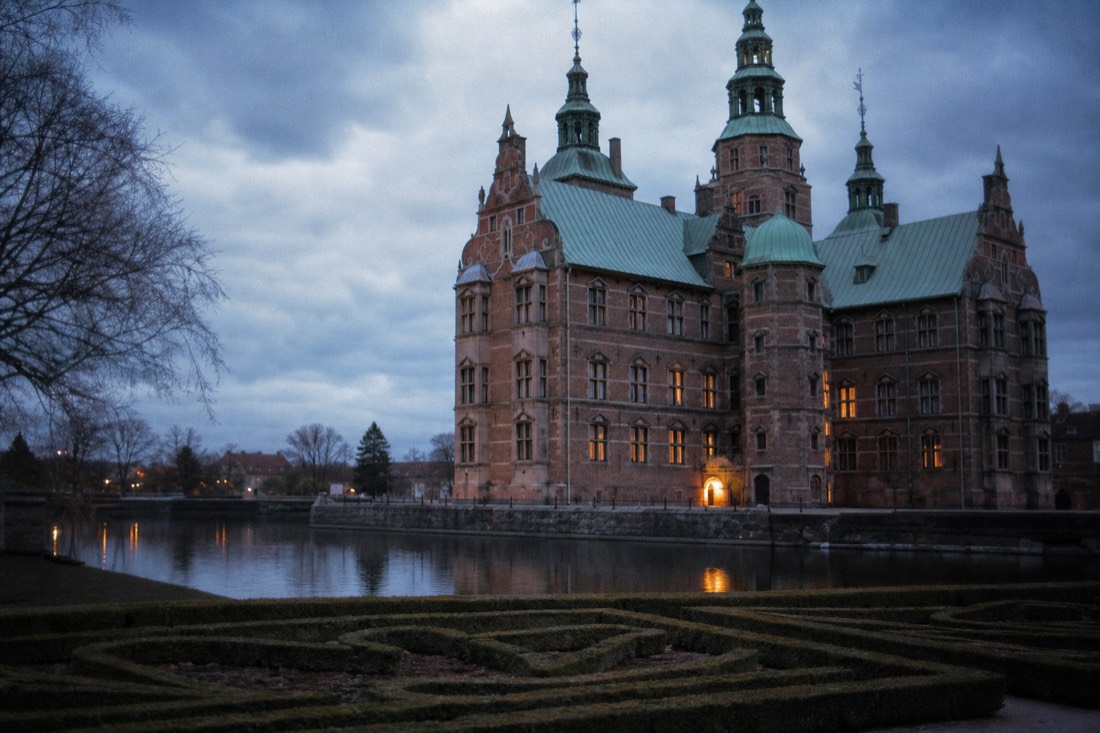
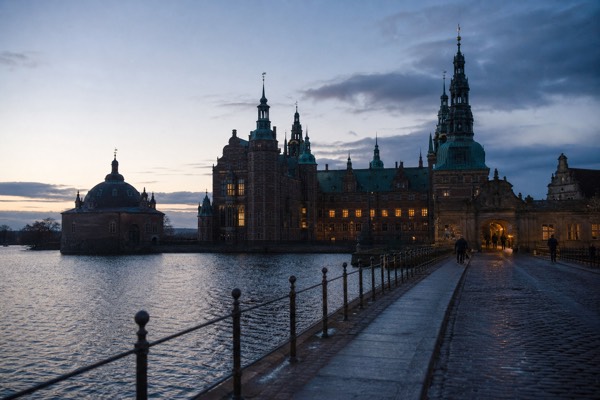
The grandest Renaissance castle in Scandinavia, set on three islets in a lake at Hillerod, now the Museum of National History with 500 years of royal portraits and a baroque garden. A free app audio guide comes with the ticket.
from $20per person; free app audio guide, live price on the listingCheck availability →
Central Copenhagen, King's Garden · The Danish crown jewels in a royal castle
A 17th-century royal summer residence in the King's Garden, best known for the crown jewels and coronation regalia held in the treasury below the castle. Compact and dense, it rewards an unhurried hour or two.
Central Copenhagen, Slotsholmen · Royal reception rooms, ruins and the tower
The seat of Danish power on Slotsholmen, holding parliament, the Supreme Court and the Royal Reception Rooms. A single ticket bundle covers the state rooms, the medieval ruins beneath, the royal kitchen and stables.